For the last five years, Thickson’s Woods, a small volunteer-run land trust, has leveraged some key opportunities to help them manage invasive species on the property; restore a meadow as it goes through ecological succession; help build climate resilience; and identify and monitor at-risk species of birds and plants.
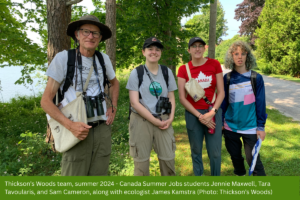
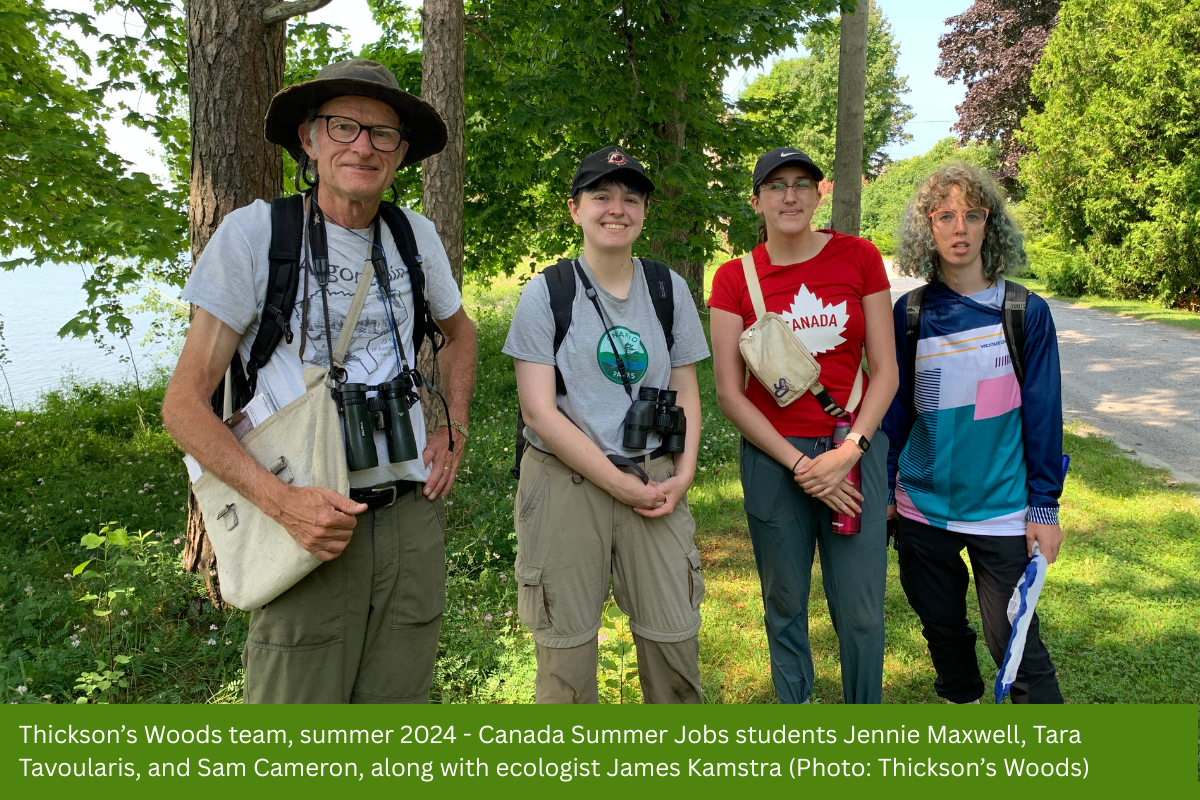
Through a combination of the Canada Summer Jobs program and small grants from the Nature Smart Climate Solutions program, the Species at Risk Action Fund, and the Ontario Federation of Anglers and Hunters, they have hired summer students to take on the management of the property – and to gain valuable experience and skills in the process. Students have played a key role at Thickson’s Woods for several years, including planting and maintaining eastern flowering dogwoods in the summer of 2022. In 2024, three students, Jennie Maxwell, Tara Tavoularis, and Sam Cameron, along with ecologist James Kamstra, conducted an inventory of the plants and birds on the site. Using the inventory, they were able to make recommendations to ensure the ecological health of the property. A few of these include:
- Creating a volunteer seed-growing program to help grow native plants like butterfly milkweed
- Cutting out core areas of buckthorn thickets and planting serviceberry and hawthorn in the meadow
- Planting a variety of trees to prevent a sugar maple monoculture from emerging
Thickson’s Woods is looking forward to at least two of last year’s students returning to take part in conserving this habitat again in the summer of 2025. With a very small budget, Thickson’s Woods has been able to tap into some funding opportunities (like SARAF), build on the work of volunteers and mentors, and strengthen the ecological health of the land trust – but perhaps one of the things they’re most proud of is contributing to the growth of future ecologists. Dan Shire, a board member, shares “The value of the practical education opportunities for students is a big part of what we do. These programs are very important because they allow us to have some staff, but they also help support the next generation of ecologists.”
Bringing together multiple generations, learning together, and conserving land together, this work exemplifies the kind of strong and enduring community that land trusts – of every size – can help build.